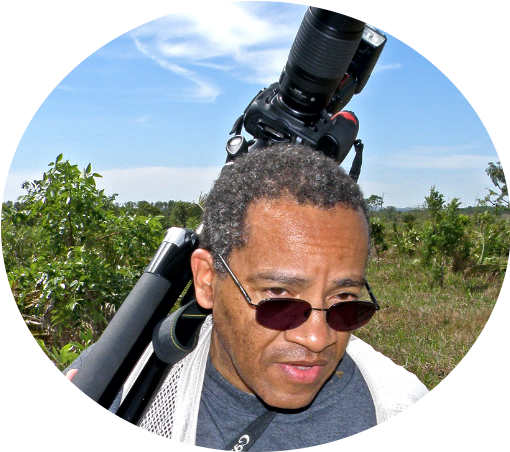
Physicist, master in biology and Ph.D. in biophysics, associate professor at the Institute of Biology at the State University of Rio de Janeiro, Brazil. I have been working with environmental scientific photography for over 20 years. I studied scientific photography at universities in Rio de Janeiro and other Brazilian states. During this time, I produced more than 400,000 digital images related to biodiversity and I have already received national and international awards. I develop my activities at the Laboratory of Radioecology and Global Change (LARAMG), with photography as a scientific method. Over the years, with the help of collaborators, we have developed several projects that culminated in the creation of the “Nucleus for Environmental Scientific Photography – Bicenas” for biodiversity studies. I am currently the coordinator of scientific photography at the Association of Nature Photographers – AFNATURA and editor-in-chief of the online magazine “Environmental Scientific Photography”.
AM
A field day photographing.
Waking up early is essential, overhaul all the equipment. Check batteries, cards, equipment cleaning, among other things. Before I head out to shoot I study the region well so I know what kind of equipment to bring.
Water, discreet clothes, cereal bars, and a lot of disposition to spend an entire morning in the Field.
PM
After lunch, I download the photos, make a backup, review the equipment, and, depending on the location, assess whether it is pertinent to leave immediately. Otherwise, I take a break then head back out into the field.
Before dinner, I download the photos again. Generally, my day doesn’t end in the afternoon, I sometimes go out in the night to do macro photography or photograph stars. After all this, another quick review of all the equipment and then head off home to sleep.